
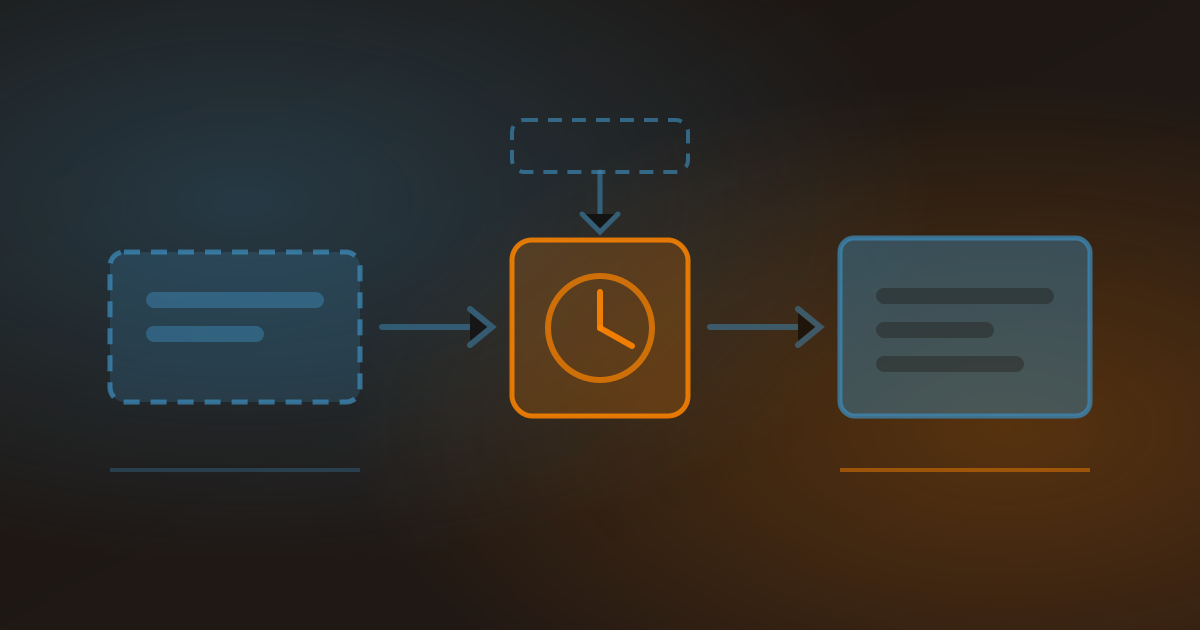
Buy an apartment in Tbilisi and you will almost certainly negotiate over a dollar figure — and transfer lari in the end. That is not a market quirk but the law: the lari is the only legal tender domestically, while the contract price may perfectly well be denominated in foreign currency. Between those two sentences sits a conversion, and anyone who leaves it unregulated hands it to whatever the rate happens to be on the day.
The rule in two sentences
First: on Georgian territory the lari is the only legal tender. Free industrial zones, duty-free areas and the cases determined by the National Bank are excepted — notably export and import transactions, capital contributions and loan payments.
Second: the price of a good or service may be denominated in foreign currency in the contract. Only the payment itself must be made in lari.
That combination produces everyday Georgian practice: property prices, commercial rents, larger service contracts and not infrequently salaries are negotiated in dollars and settled in lari.
A third rule gets overlooked more often, because it binds the seller rather than the buyer: anyone offering or advertising goods or services in Georgia must state the price in lari. The dollar figure belongs in the contract and in the negotiation — not on the price tag and not in the listing.
Where the rate comes from — and why it is yesterday’s
Almost every contract points to the official rate of the National Bank of Georgia for conversion. How that rate comes about has a property that contract drafting rarely accounts for:
-
Collection
The National Bank collects registered spot trades on the interbank market over the period from 16:30 on the previous business day to 16:30 on the current one.
-
Calculation
From those trades it forms a weighted average rate against the US dollar; rates against other currencies are derived from it and from international quotations.
-
Publication
The rate is announced by 17:00 on the same day.
-
Effect
It only becomes effective on the following business day. Pay at the official rate today and you are settling on yesterday's market.
In quiet weeks that offset is a rounding error. In volatile ones it is not: in early December 2024 the lari lost enough within days that a single day’s lag on a USD 150,000 purchase price amounted to a four-figure sum. How that episode unfolded is covered in the lari from 2023 to 2026.
The GEL 200,000 threshold
The National Bank’s larisation policy draws a hard line at GEL 200,000. Below that threshold:
- Loans must be disbursed in lari provided the borrower's total liability towards the lender does not exceed GEL 200,000
- Instalment purchases of property may not be indexed to a foreign currency where the buyer's total liability is up to GEL 200,000
- Finance leases may not be indexed to a foreign currency unless the lessee's total liability exceeds the threshold
- Above the threshold, foreign-currency contracts are permitted the payment itself still has to be made in lari
- Conversion uses the official NBG rate on the transaction date for converting the foreign-currency amount into lari at disbursement
The purpose is plain: private households should not end up indebted in foreign currency, because a depreciation then pulls lari income and dollar debt apart — exactly the configuration that pushed Georgian mortgage borrowers into crisis in 2015. For you as a buyer or investor, the threshold mainly means one thing: check which side of the line you sit on whenever instalments are involved.
The fines are low enough to deter little in practice — GEL 200 for individuals and GEL 400 for legal entities on the basic offence, GEL 1,000 and then GEL 5,000 for repeated price-display breaches. The real exposure is not the fine but the possibility that a clause is unenforceable or adjusted in a dispute.
What this means in practice
Buying property. The price is in dollars, the notary appointment fixes it, the transfer is in lari. Days often pass between signing and payment. Agree the reference date in writing, and recalculate the amount yourself on the day of payment — do not leave that to the other side.
Renting. Residential rents in Tbilisi are frequently negotiated in dollars and paid monthly in lari. Your rent expense in lari therefore moves month to month. Earn in lari and you should push for a lari rent; earn in euros or dollars and foreign-currency denomination serves you better.
Salaries. The same logic with the sign reversed. A dollar-denominated salary protects the employee against depreciation and burdens the employer, who earns in lari. Anyone hiring in Georgia should make that choice deliberately — more in hiring in Georgia.
The company account. This is where a multi-currency account earns its keep: earn in dollars and denominate obligations in dollars, hold both in the same currency, and convert only what genuinely has to be spent in lari. Opening the account itself is described in open a bank account in Georgia.
And the structural reason this market thinks in dollars at all: roughly 53 percent of all bank deposits in the country are held in foreign currency, and over 60 percent among individuals. In Georgia the dollar is not the means of payment, but it is the unit of account — and the legal ban on paying in dollars does not change that. It merely moves the exchange-rate risk to the moment of payment.
Frequently asked questions
Can you pay in dollars or euros in Georgia?
Domestically, as a rule no. The lari is the only legal tender on Georgian territory; exceptions cover free industrial zones, duty-free areas and the cases defined by the National Bank such as export and import transactions, capital contributions and loan payments. The price may be denominated in foreign currency in the contract — the payment itself is made in lari.
Why are properties advertised in dollars then?
Because denominating the contract price in foreign currency is permitted and the market has historically anchored on the dollar. Advertising, however, must be in lari: anyone offering or promoting goods or services in Georgia has to state the price in lari. The dollar figure is a contractual and negotiating quantity, not a permissible shop-window label.
Which exchange rate applies to the payment?
Contractually the one agreed — in practice almost always the official rate of the National Bank of Georgia. It is calculated as a weighted average of interbank trades between 16:30 on the previous business day and 16:30 on the current one, published by 17:00 and effective the following day. You are therefore settling at the previous day's rate.
Is there a threshold for foreign-currency loans?
Yes, GEL 200,000. Loans up to that amount must be disbursed in lari, provided the borrower's total liability towards the lender does not exceed the threshold. The same applies to instalment purchases of property and to finance leases — indexing to a foreign currency is not permitted below the threshold.
What happens if the rules are breached?
Fines apply. The basic offence carries GEL 200 for individuals and GEL 400 for legal entities. Price-display breaches draw a warning first, then GEL 1,000 on repetition and GEL 5,000 thereafter. Breaches concerning loans, instalment purchases and leasing bring a warning and, if not cured within 30 days, GEL 1,000 with escalation on repetition.
How do I protect myself as a buyer against rate movements?
With an explicit conversion clause. Specify which rate applies (the National Bank's official rate), which date it refers to (the day funds are received, or a fixed date) and who bears movement beyond a defined band. Without such a clause the party making the payment bears the risk in practice.
Does this affect salaries and rent too?
Yes. Employment contracts and leases can be denominated in foreign currency, but payment is made in lari. For employees that means a monthly net income in lari that moves; for landlords, income that moves. Both are negotiable and belong in the contract.
This article is general information and does not constitute legal or tax advice. The currency and larisation rules described are a summary of the principles; National Bank exemptions, thresholds and fine levels can change. Have contracts with a foreign-currency element reviewed before signing. Last updated August 2026; rules may change.